
Denver Hail Damage HVAC Checklist: 5 Things Homeowners Should Inspect After the June 1 Storm
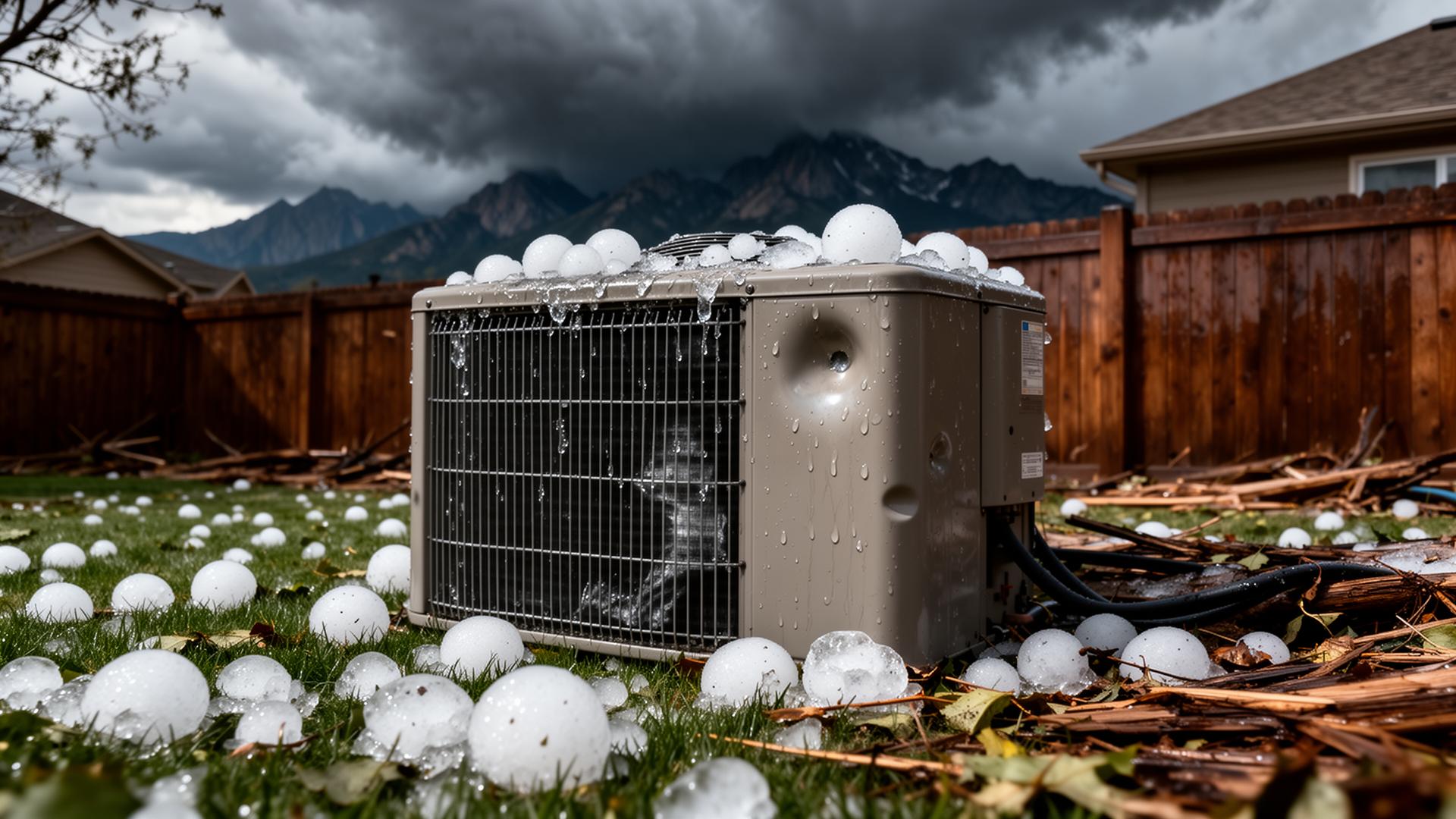
On Monday, June 1, 2026, a powerful hailstorm swept across the Denver metro and the Front Range, dropping hail reported to be larger than a golf ball. Roofs and cars made the news, but the outdoor unit of your HVAC system is often the most overlooked casualty. If you live anywhere from Denver up through Longmont, Loveland, Greeley, or Boulder, use this 5-point checklist to decide whether you need a professional HVAC repair inspection.
Why Hail Is So Hard on HVAC Equipment
Outdoor condensers and heat pumps are built tough, but the aluminum fins, fan blades, and refrigerant lines are exposed by design, they have to be, to move heat. Hail the size of a golf ball (1.75″) or larger carries enough energy to flatten fins, bend the top grille into the fan, and dent the cabinet hard enough to pinch refrigerant lines. Damage isn't always obvious from the curb, which is why a structured walk-around matters.
Your 5-Point Post-Storm HVAC Checklist
1. Inspect the Condenser Fins for Dents or Flattening
The thin aluminum fins wrapped around your outdoor AC or heat pump are the most vulnerable part of the unit. Golf-ball-sized hail can flatten or shred large sections in seconds. Bent fins block airflow, force the compressor to work harder, and quietly drive up energy bills. If more than a small patch looks crushed or you can see dark gaps where the fin pattern is broken, schedule an HVAC repair inspection.
2. Check the Top Grille and Fan Blades
Look down through the top grille of the outdoor unit. Hail often punches the grille into the fan blades, leaving them bent, cracked, or scraping when the system runs. Turn the unit off at the disconnect, then gently spin the fan by hand, it should rotate freely and silently. Wobble, grinding, or contact with the shroud means the unit needs a professional repair before you run it again.
3. Look for Dents, Cracks, or Paint Damage on the Cabinet
Walk around the cabinet and photograph every side in daylight. Deep dents can pinch internal refrigerant lines, and cracked panels let moisture reach electrical components. Even cosmetic dings matter, insurance adjusters in Denver and Northern Colorado typically need clear before/after photos to approve a hail damage claim on an HVAC system.
4. Listen and Feel for Performance Changes
Run your AC for 15–20 minutes and pay attention. Warning signs include: warm air from the vents, longer-than-normal run times, new buzzing or rattling from outside, ice forming on the refrigerant line, or a tripped breaker. Any of these after Monday's storm point to a hail-related issue, most commonly a refrigerant leak from a damaged coil, and call for a licensed HVAC repair technician right away.
5. Check the Refrigerant Line Set and Electrical Whip
Follow the two copper lines (one insulated, one bare) from the outdoor unit into the house. The foam insulation is fragile and hail often tears it open, exposing copper that can kink or corrode. Also look at the flexible electrical conduit (the whip): if it's dented, pulled loose, or the disconnect box is cracked, do not operate the system, that's an electrical hazard that needs a HVAC repair pro on-site the same day.
When to Call an HVAC Repair Company
A licensed Northern Colorado HVAC repair technician should look at your system if you see any of the following:
- Visible dents, cracks, or punctures anywhere on the cabinet
- More than ~10% of the fin surface is flattened or torn
- Fan blades are bent, cracked, or contact the shroud
- AC blows warm air, short-cycles, or trips the breaker
- Hissing sounds, ice on the line set, or refrigerant smell
- Damaged electrical whip, disconnect box, or exposed wiring
Document Everything Before You Call Insurance
Before scheduling repairs, take dated photos of every side of the outdoor unit, the fins, the top grille, and the line set. Most Colorado homeowners' policies cover hail damage to HVAC equipment, but adjusters move quickly after a major storm like 6/1/2026 - clear photos and a professional HVAC repair estimate make claims go through faster.
Local HVAC Repair You Can Trust
Woelfel Heating & Air has served Denver, Longmont, Loveland, Boulder, Greeley, and the rest of Northern Colorado for years. After this week's storm, we're prioritizing hail-damage inspections, we'll comb the unit, document findings for your insurance carrier, and get your cooling back online before the next Front Range heat wave hits.